A household can have months of food, clean water, a generator and a full first aid kit and still come apart in a crisis. The weak point is often the people. Under sudden stress some people freeze, and others make one hasty decision after another. Preparing the mind gets less attention than preparing the pantry, mostly because it cannot be bought.
What resilience is
Resilience is the capacity to absorb a shock and recover: to keep functioning through a hard stretch and bounce back afterward. It covers the large disasters that preparedness usually imagines, and also the far more common ones, such as losing a job, losing someone close, or being caught up in a frightening incident in a public place.
Brain research has linked resilience to how well the prefrontal cortex, the region behind the forehead that handles planning, judgment and self-control, can regulate the amygdala, the older structure that sets off fear and aggression. In people who cope well, the thinking brain can talk the alarm system down. In people who struggle, the alarm tends to win. The research is still developing and does not reduce resilience to a single circuit, but it fits what trainers and first responders see in practice: calm under pressure improves with rehearsal.
What shapes it
Some of the influences are outside anyone’s control. The family a person was born into, where and when they grew up, and how much money and support were available all seem to play a part.
More of it is psychological, and that part can be worked on. People with a hopeful, optimistic outlook tend to recover better than those who are cynical or struggling with depression. A useful principle for children and adults alike: nobody gets to choose most of what happens to them, or what other people say and do, but everyone has a say in how they respond and the attitude they bring.
Researchers have also identified things that wear resilience down. Repeated loss and failure is one. Another is an unwillingness to ask for help. A third is weak problem-solving skill, because a person who cannot see a way forward stops looking for one.
None of this is fixed. Resilience can be built, and the rest of this page covers ways to build it at home.
Daily reflection
A regular period of quiet thought is one of the simplest exercises for the mind. The contributor who first wrote about this approach described spending thirty minutes to an hour each morning and evening reading and reflecting on scripture. Others get the same benefit from secular meditation, journaling or a long walk without a phone. What matters is the habit of sustained, deliberate thinking. Most people spend remarkably little of their day actually thinking something through.
Breathing under pressure
The body’s alarm response can be interrupted deliberately, and the simplest tool for it is slow, controlled breathing. Many police officers, soldiers and paramedics are taught a version often called box breathing: breathe in for a count of four, hold for four, breathe out for four, hold for four, and repeat for a minute or two. Slowing the breath slows the heart and gives the thinking brain a chance to catch up.
Like any drill, it works best when it has been practiced before it is needed. Children can learn it as a game, counting out loud together, and then use it before a test, at the dentist, or after a fall. An adult who has used it a hundred times in small moments is far more likely to reach for it in a large one.
Games that ask “what if”
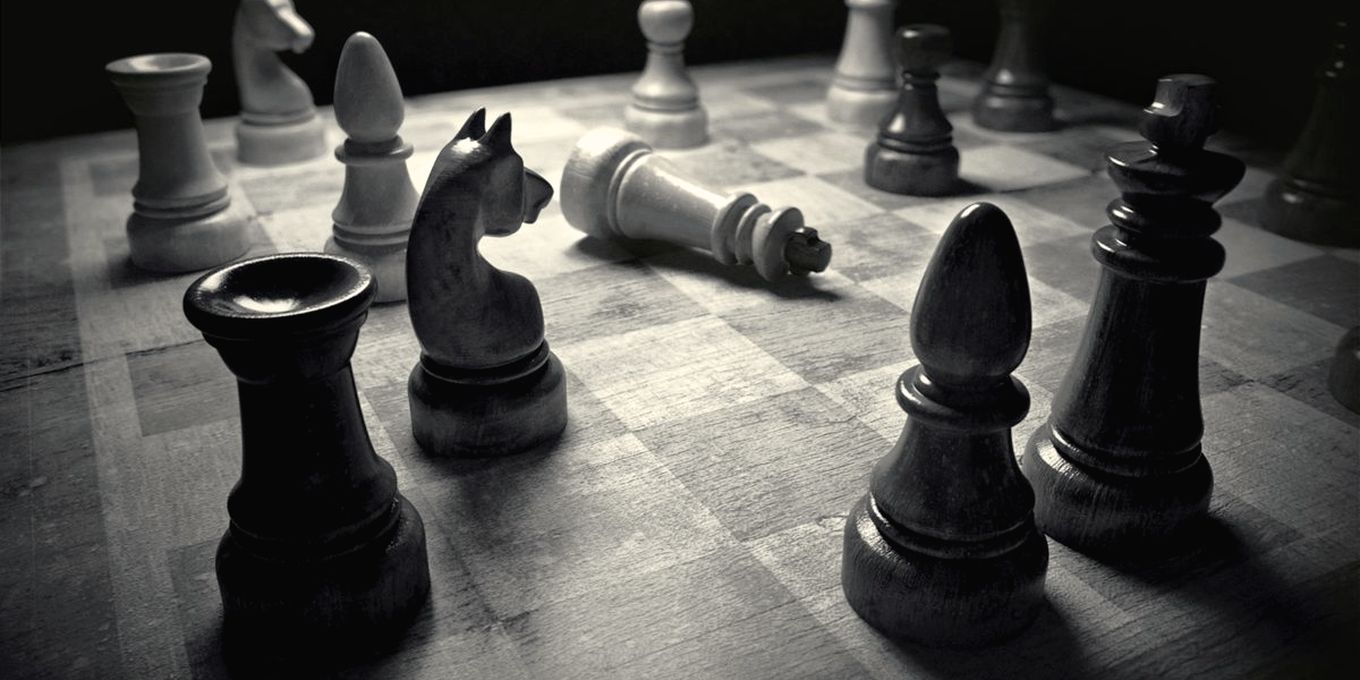
Military planners and intelligence analysts run war games and tabletop exercises for a reason. Walking through a scenario before it happens builds the critical and creative thinking that a real crisis demands, and it exposes weak spots in a plan while they are still cheap to fix. Families can borrow the same idea.
Scenario games
Commercial strategy and simulation board games let players work through complex situations with limited information, which is closer to real decision-making than most entertainment. Survival-themed card games go further, dealing each player a dilemma (a flood, a stranded car, a stranger at the door) and asking what they would do and why. Nobody is likely to face the exact situation on the card. The value is in practicing a fast, reasoned answer, and in discovering what each person actually values once the choice gets hard.
A homemade version needs no equipment at all. At dinner, one person describes a situation: the power has been off for three days, the car won’t start and the pharmacy is closed. Everyone else says what they would do first. Then change one detail and ask again.
Physical scenario play
Games that put the body to work alongside the mind add stress and time pressure, which is where decisions get tested. One family that wrote about this played paintball on their own land with a different objective for each team, drawn from situations that could plausibly happen there. Capture the flag, orienteering races and night-time hide and seek serve the same purpose with less gear. Each one forces quick decisions on incomplete information, and a plan that looked fine on paper often shows its weak spots in the first round.
Kim’s Game
Observation is the most practical of these skills day to day, and it is the one people most often claim to have without having trained it. The classic exercise comes from Rudyard Kipling’s 1901 novel Kim, in which the young hero is trained in observation by being shown a tray of jewels and other small objects, then asked to describe them after they are covered (Kim, Project Gutenberg). Scouts and military trainers have used versions of it ever since.
How to play
- Lay out a group of small, varied objects on a table.
- Let the players study them for a fixed time, such as one minute.
- Cover or remove the objects.
- Each player writes down or says as many observations as they can: what the objects were, their colors, positions, markings, condition.
- Score one point per correct observation. The players decide together what counts.
As skill improves, add more objects, shorten the viewing time, or wait longer before asking for the list.
Playing it anywhere
The real strength of Kim’s Game is that it needs no tray. Families who spend a lot of time driving can play it through the car window: everyone looks out one side for a minute, then lists what they saw, one point per item. Waiting in a parking lot, the challenge might be to watch the next ten people leave a store and describe them afterward. Walking through the neighborhood, a parent can ask about the house just passed: the color of the door, whether a car was in the drive, whether a window was open.
The old alphabet game belongs in the same family. Players find the letters A to Z in order on signs and license plates along the road, which keeps eyes moving and attention outward.
The best version is the unannounced one. Asking, without warning, for a description of the last five people who walked by tests whether noticing has become a habit rather than something switched on for the game. Children who play often enough start doing it on their own.
Reading people
As children get older, observation can extend to behavior. Most people in a public place behave in predictable ways: they wait, they shop, they look at their phones. Awareness training teaches people to learn that baseline and to notice what does not fit it. Someone watching the crowd instead of the departure board, pacing without purpose, or repeatedly checking the same exit stands out once the eye knows what normal looks like.
Security trainers often use recorded footage of incidents to show the behavior that came before them, and some families use the same material, carefully chosen for age, to teach older children what to watch for. The goal is not suspicion of everyone. It is a trained habit of noticing early, so that there is time to move away, get help or simply pay closer attention.
The skill pays off most for people who travel often or commute through busy stations and airports, where the crowd is large and the baseline changes by the minute.