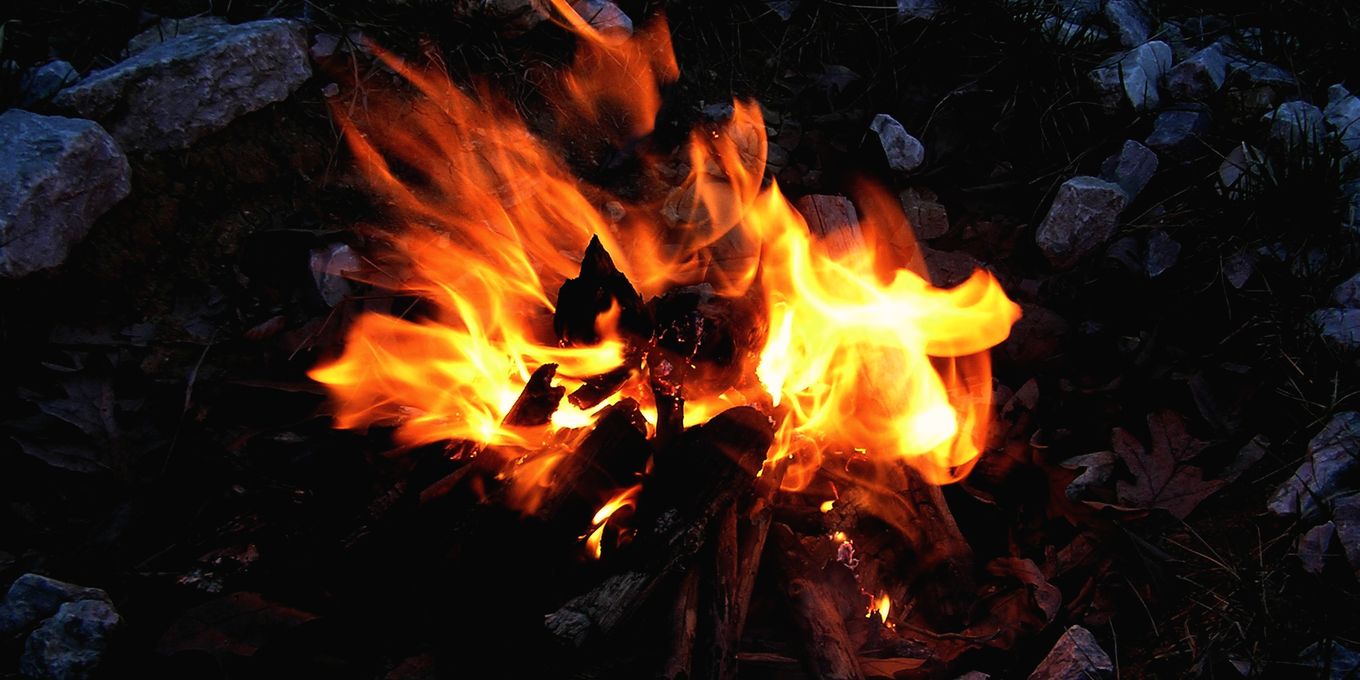
For cooking off the grid, the rocket stove is hard to beat on fuel. It runs on the twigs and prunings a yard produces anyway, burns them almost completely and puts very little smoke into the air.
The design is credited to Dr. Larry Winiarski, technical director of the Aprovecho Research Center in Oregon, who developed it in the 1980s and 1990s as part of a search for cleaner cookstoves for households that cook over open fires. Factory-built versions, such as the StoveTec models, were on sale for home and camp use by the late 2000s. Plenty of people also build their own from bricks, cinder blocks or cans.
How it works
A rocket stove is an L-shaped tube. Sticks go in the short horizontal arm, the fire burns at the bend, and the flame and hot gas rush up the vertical arm to the pot. Several design points make that simple shape efficient, and the design principles published by Aprovecho set them out in full. The ones that matter most for a home cook are these:
- The combustion chamber is insulated with light, heat-resistant material, so the heat stays in the fire instead of soaking into a heavy stove body. A hotter fire burns the smoke instead of releasing it.
- Above the fire sits a short insulated chimney, about two to three times as tall as it is wide. Its draft pulls air through the fuel at speed.
- Only the tips of the sticks burn. They rest on a shelf or grate in the feed opening, with air flowing underneath, and are pushed in as they are used up.
- The pot sits on supports that leave a narrow gap, and a skirt around the pot forces the hot gas to scrub its sides before escaping, which is where much of the fuel saving comes from.
Push sticks in slowly. Packing the feed opening full chokes the draft and brings the smoke back.
What one can do
One widely shared field report described a cold-weather test with a commercial stove: 72 ounces of water brought to a boil in 15 minutes, outdoors at 29°F, on a few sticks. That is consistent with lab testing of improved stoves, where rocket-type stoves regularly boil the same water on markedly less wood than an open fire. Wind, damp fuel and a pot without a lid all slow it down.
Using one safely
A rocket stove is an outdoor appliance. Burning wood makes carbon monoxide even when the flame looks clean, and a stove used in a kitchen, garage, tent or porch with the doors shut can kill. Cook outside, well away from open windows and doors.
- Set it on bare ground, stone or brick, clear of dry grass, leaves and anything overhead that can catch.
- Keep children and pets back. The chimney and top of a steel stove get hot enough to burn skin instantly.
- Use dry sticks about thumb thickness. Wet wood smokes and struggles.
- Never start or revive it with gasoline or other volatile fuel.
- Check local burn bans before lighting up; a small stove still counts as an open fire in many places during dry spells.
- Let it burn out completely, and drown or bury the ashes before leaving it.
With dry kindling and a lidded pot, it will see a household through a long outage on fuel that would otherwise go to the curb.